Would you like to switch to the accessible version of this site?

Go to accessible site Close modal window

Don't need the accessible version of this site?

Hide the accessibility button Close modal window
Accessibility View Close toolbar

(775) 825-7984

Open mobile navigation
  • Home
  • About Us
    • Meet The Team
    • Virtual Office Tour
    • Pet Memorials
  • New Patient Center
    • Online Forms
    • Payment Options
    • Veterinary Resources
  • Services
    • Rx Home Delivery
    • Dentistry
    • Ultrasound
    • Laser Therapy
    • Cancer Treatment
    • Geriatric/Hospice Care
    • Online Medical Records
    • Veterinary Topics
    • Pet Selector
  • Contact Us
    • Emergencies
    • Schedule an Appointment
  • Schedule Appointment
  • Galleries
  • Petsimonials
  • Links
  • Careers
  • Blog
  • Home >
  • Articles >
  • Feline >
  • Pet Health >
  • Chronic Conditions >
  • Feline Anemia

Feline Anemia

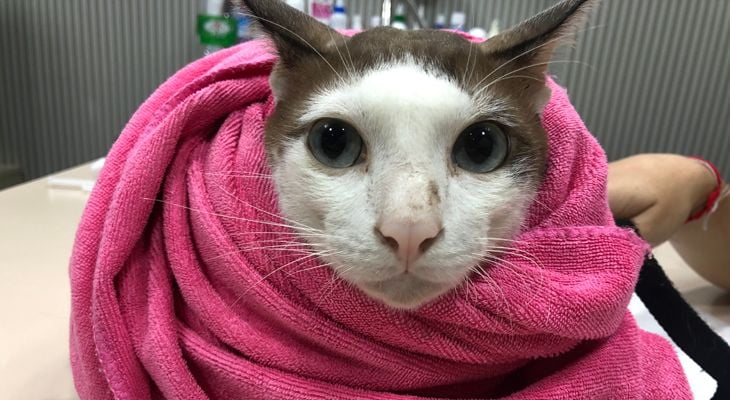
feline wrapped in towel
A diagnosis of anemia means your cat does not have enough red blood cells and/or hemoglobin to carry sufficient oxygen to all of his or her tissues. Each red blood cell lives only 70 to 80 days, so your cat’s body must constantly replenish these. Anemia itself is not a disease; it indicates that some disease condition or process is going on in your cat.

If your cat has nonregenerative anemia, the blood marrow is not producing these red blood cells fast enough. Feline leukemia virus infection often causes nonregenerative anemia. In regenerative anemia, enough red blood cells are produced, but they are dying off too fast or are being lost in blood via hemorrhage. Your feline veterinarian must determine which type of anemia your cat has in order to administer the proper treatment.

When people hear the term anemia, they usually associate it with iron deficiency. However, this is rarely the cause of anemia in cats.

Symptoms

Owners of anemic cats may notice unusual paleness in their cat’s gums rather than the normal, healthy pink color. The other major symptom is lethargy or loss of stamina.

Diagnosis

If your veterinarian suspects anemia, he or she will want to take a blood sample and do a packed cell volume test, also called a hematocrit. This involves processing the sample in a centrifuge to separate red blood cells from the liquid plasma. A normal cat’s blood should include 25 to 45 percent red blood cells. If this count is below 25 percent, your cat is anemic. Your vet may also use other tests.

Causes

Many diseases and conditions can cause anemia. These can generally be grouped into diseases that cause blood loss, diseases that break down or destroy red blood cells and diseases that suppress bone marrow. For example, parasitic infestations, intestinal tumors, injury and diseases that reduce blood clotting can all cause blood loss and lead to anemia. Sometimes people wonder whether anemia is hereditary. While anemia itself is not hereditary, your cat might inherit a disorder that causes this red blood cell deficiency.

Hemolytic Anemia

Immune-mediated hemolytic anemia causes a cat’s immune system to reject red blood cells as foreign bodies. This type of regenerative anemia springs from many causes and is especially hard to diagnose and treat. Immune-suppressing medications sometimes help this potentially fatal condition.

Treatment

Your veterinarian first needs to determine the underlying disease in order to appropriately treat anemia. Treatments include deworming, steroids and other medications. In severe, life-threatening cases, your cat may require a blood transfusion to stabilize his or her condition. Prognosis varies depending on the anemia’s cause. Otherwise healthy cats that are diagnosed early have the best prognosis.

If your cat is listless and has pale gums, call us today. We can diagnose your cat and help devise the best treatment plan.

No article settings found. Please configure it

Featured Services

  • Online Forms

    Our patient forms are available online so they can be completed in the convenience of your own home or office.
  • Services

    We strive to provide complete care for our patients. Learn more about all the services we provide.

Office Hours

Monday:

7:30 AM-5:30 PM

Tuesday:

7:30 AM-5:30 PM

Wednesday:

7:30 AM-5:30 PM

Thursday:

7:30 AM-5:30 PM

Friday:

7:30 AM-5:30 PM

Saturday:

Closed

Sunday:

Closed

Find Us

Check out the map below to locate SWVH!

Testimonials

We love to hear your feedback!

  • "Southwest Vet is a wonderful place to take our animals. The front desk ladies are knowledgeable, patient, and compassionate. The vet techs are so wonderful with our animals. And Drs. Sargent and Rasmussen are just the tops!! The care our animals receive is extraordinary!!"
    Sarah S.
  • "Thank you so much for all that you do. You have always gone above and beyond for my pets and I. I feel truly blessed to have found you when I moved to Reno. Tank thinks you’re pretty awesome, too!"
    Ashley D.
  • "Thank you to each and every one of you who helped care for Gus while he was recovering during his long and scary week with Parvo. We can’t thank you enough for everything you did to get our loving and playful guy home."
    Aaron and Lisa C.
  • "So rare it seems to encounter an entire professional office who are as smart as they are kind. We are so grateful to have you care for Einstein. Thank you for your excellent care, patience and generosity."
    Leah R.

Featured Services

  • March Newsletter: How to Keep Your Cat Safe When Outdoors

    Wondering how your cat can safely spend time outdoors? ...

    Read More
  • March Newsletter: How to Choose Safe Blankets for Pets

    Do you know how to pick a safe blanket for your pet? ...

    Read More
  • February Newsletter: How to Reduce Dental Anxiety in Pets

    Does your pet hate toothbrushing? These tips could reduce dental anxiety. ...

    Read More
  • February Newsletter: How to Safely Change Your Cat’s Food

    Buying a new food for your cat? Find out how to switch foods safely. ...

    Read More
  • January Newsletter: Signs Your Pet Needs a Wellness Exam

    Does your pet need a wellness exam? ...

    Read More
  • January Newsletter: How Your Veterinarian Can Help If Your Pet Ingests Something Toxic

    Has your pet eaten something it shouldn't have? Find out how your vet can help. ...

    Read More

Newsletter Sign Up

Error!

    • Copyright © 2026 MH Sub I, LLC dba iMatrix.
    • Admin Log In
    • Site Map