Would you like to switch to the accessible version of this site?

Go to accessible site Close modal window

Don't need the accessible version of this site?

Hide the accessibility button Close modal window
Accessibility View Close toolbar

(775) 825-7984

Open mobile navigation
  • Home
  • About Us
    • Meet The Team
    • Virtual Office Tour
    • Pet Memorials
  • New Patient Center
    • Online Forms
    • Payment Options
    • Veterinary Resources
  • Services
    • Rx Home Delivery
    • Dentistry
    • Ultrasound
    • Laser Therapy
    • Cancer Treatment
    • Geriatric/Hospice Care
    • Online Medical Records
    • Veterinary Topics
    • Pet Selector
  • Contact Us
    • Emergencies
    • Schedule an Appointment
  • Schedule Appointment
  • Galleries
  • Petsimonials
  • Links
  • Careers
  • Blog
  • Home >
  • Articles >
  • Feline >
  • Pet Health >
  • Digestive and Oral Health >
  • Hairballs

Hairballs

cats hairball
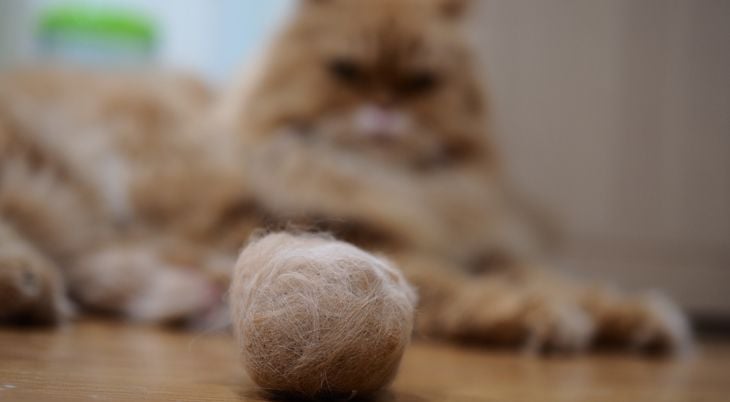
Cat owners are all too familiar with that distinctive sound that cats making when trying to expel a hairball, often in the middle of the night. However, did you know that coughing up hairballs is crucial to your cat? The inability to do so can result in a deadly intestinal blockage.

Anatomy of a Hairball

Cats’ fastidious grooming habit means they swallow a lot of their own fur. Little projections on your cat’s tongue catch the hairs and propel them down the throat. However, keratin, the insoluble protein prevalent in hair, is indigestible. Most of the hair makes it through your cat’s system and winds up as feces. Some fur accumulates in the stomach, growing and growing until it starts to obstruct the digestion process. When this happens, you will hear that unique hacking sound, until out pops a wet, cigar-shaped, bile-soaked trichobezoar, which is commonly known as a hairball. A typical hairball measures 1 inch long, but cats have produced some as big as 5 inches long and 1 inch thick. Usually gastric secretions make the hairball slightly darker than the cat’s coat. Long-haired cats and excessive groomers or shedders may produce up to one hairball per week.

Hairball Hazard

Hairball ejection is normal and healthy. The problems start to occur when your cat stops eating and keeps retching. This could indicate a serious intestinal blockage. Suddenly, the annoying hairball has become life-threatening.

If your veterinarian suspects a dangerous hairball, he or she will use a combination of X-rays, blood work, ultrasound tests and physical palpation to diagnose the problem. Sometimes laxatives can expel the hairball through the digestive tract. If the hairball is too large or tightly lodged, surgery may be necessary.

Help for Hairballs

You can help your cat prevent the dangers and everyday indignities of hairballs by daily brushing his or her fur, and then wiping away loose hairs with a cloth. If your cat is averse to brushing, find a good groomer to visit at least once per year. Some types of high-fiber cat foods can decrease hairball production. Ask your veterinarian if hairball remedies, such as mild laxatives, are appropriate for your cat.

How do you know when to call the vet? If your cat’s constipated, refuses to eat or has been gagging for more than a day, call our office immediately. We are happy to help.

No article settings found. Please configure it

Featured Services

  • Online Forms

    Our patient forms are available online so they can be completed in the convenience of your own home or office.
  • Services

    We strive to provide complete care for our patients. Learn more about all the services we provide.

Office Hours

Monday:

7:30 AM-5:30 PM

Tuesday:

7:30 AM-5:30 PM

Wednesday:

7:30 AM-5:30 PM

Thursday:

7:30 AM-5:30 PM

Friday:

7:30 AM-5:30 PM

Saturday:

Closed

Sunday:

Closed

Find Us

Check out the map below to locate SWVH!

Testimonials

We love to hear your feedback!

  • "Southwest Vet is a wonderful place to take our animals. The front desk ladies are knowledgeable, patient, and compassionate. The vet techs are so wonderful with our animals. And Drs. Sargent and Rasmussen are just the tops!! The care our animals receive is extraordinary!!"
    Sarah S.
  • "Thank you so much for all that you do. You have always gone above and beyond for my pets and I. I feel truly blessed to have found you when I moved to Reno. Tank thinks you’re pretty awesome, too!"
    Ashley D.
  • "Thank you to each and every one of you who helped care for Gus while he was recovering during his long and scary week with Parvo. We can’t thank you enough for everything you did to get our loving and playful guy home."
    Aaron and Lisa C.
  • "So rare it seems to encounter an entire professional office who are as smart as they are kind. We are so grateful to have you care for Einstein. Thank you for your excellent care, patience and generosity."
    Leah R.

Featured Services

  • March Newsletter: How to Keep Your Cat Safe When Outdoors

    Wondering how your cat can safely spend time outdoors? ...

    Read More
  • March Newsletter: How to Choose Safe Blankets for Pets

    Do you know how to pick a safe blanket for your pet? ...

    Read More
  • February Newsletter: How to Reduce Dental Anxiety in Pets

    Does your pet hate toothbrushing? These tips could reduce dental anxiety. ...

    Read More
  • February Newsletter: How to Safely Change Your Cat’s Food

    Buying a new food for your cat? Find out how to switch foods safely. ...

    Read More
  • January Newsletter: Signs Your Pet Needs a Wellness Exam

    Does your pet need a wellness exam? ...

    Read More
  • January Newsletter: How Your Veterinarian Can Help If Your Pet Ingests Something Toxic

    Has your pet eaten something it shouldn't have? Find out how your vet can help. ...

    Read More

Newsletter Sign Up

Error!

    • Copyright © 2026 MH Sub I, LLC dba iMatrix.
    • Admin Log In
    • Site Map