Would you like to switch to the accessible version of this site?

Go to accessible site Close modal window

Don't need the accessible version of this site?

Hide the accessibility button Close modal window
Accessibility View Close toolbar

(775) 825-7984

Open mobile navigation
  • Home
  • About Us
    • Meet The Team
    • Virtual Office Tour
    • Pet Memorials
  • New Patient Center
    • Online Forms
    • Payment Options
    • Veterinary Resources
  • Services
    • Rx Home Delivery
    • Dentistry
    • Ultrasound
    • Laser Therapy
    • Cancer Treatment
    • Geriatric/Hospice Care
    • Online Medical Records
    • Veterinary Topics
    • Pet Selector
  • Contact Us
    • Emergencies
    • Schedule an Appointment
  • Schedule Appointment
  • Galleries
  • Petsimonials
  • Links
  • Careers
  • Blog
  • Home >
  • Articles >
  • Feline >
  • Pet Health >
  • Chronic Conditions >
  • Hyperthyroidism in Cats

Hyperthyroidism in Cats

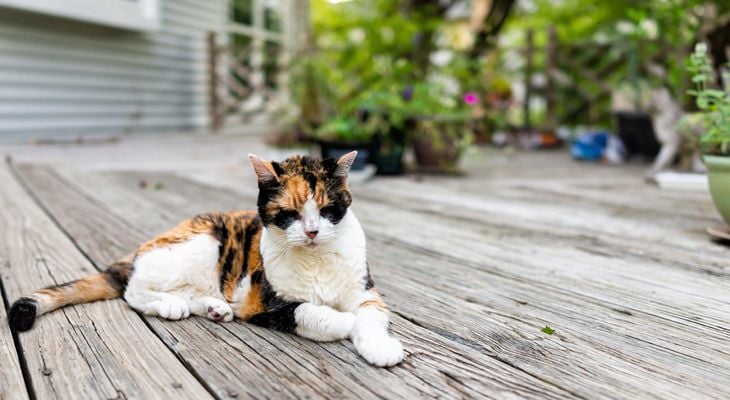
cat laying outside
Hyperthyroidism is a condition that causes a cat’s thyroid gland to produce too much thyroid hormone. This disease most often shows up in middle-aged and older cats.

The thyroid gland is located in the neck. Thyroid hormones affect most organs in the body, so hyperthyroidism can lead to other problems in these organs.

Symptoms of Hyperthyroidism

In hyperthyroidism, the thyroid gland becomes enlarged and makes too much of the thyroid hormones T3 and T4. The symptoms of hyperthyroidism are related to the effect that the hormones have on the body.

Excess thyroid hormones can cause the heart to beat faster and stronger. Left untreated, this can lead to damage to the heart.

The thyroid hormones can also lead to high blood pressure (hypertension). This can damage the kidneys, heart, brain and eyes.

The most common symptoms of hyperthyroidism include:

  • Loss of weight
  • Increased appetite
  • Increased thirst and urination
  • Vomiting
  • Diarrhea
  • Hyperactivity

Diagnosis and Treatment of Hyperthyroidism

To diagnose hyperthyroidism in your cat, your feline veterinarian will use the following:

  • Physical exam to check for an enlarged thyroid and increased heart rate or blood pressure
  • Blood tests to look for higher levels of thyroid hormones
  • Blood and urine tests to look for problems in other organs, such as the heart and kidneys

Treating hyperthyroidism may reverse problems caused by hypertension or increased heart rate. Sometimes, though, these conditions will require separate treatment.

The main treatments for hyperthyroidism include:

  • Medication. Anti-thyroid drugs reduce the amount of thyroid hormones made and released by the thyroid gland. This does not cure the condition, but reduces the symptoms and the effects on other organs. This treatment must be given for the rest of a cat’s life. Regular checks of the amount of thyroid hormones in the blood are also needed.
  • Surgery. Surgically removing part or all of the thyroid gland reduces the amount of thyroid hormones in the blood. This is a permanent treatment. If the entire thyroid gland is removed, a cat will need to take replacement thyroid hormones for the rest of its life. If only part of the thyroid is removed, they may not need this replacement therapy.
  • Radioactive-Iodine Therapy. This treatment involves injecting radioactive iodine into the bloodstream. The thyroid takes up the iodine, while the other tissues ignore it. The radiation from the iodine destroys some of the thyroid tissue, but not nearby tissues. The thyroid hormones in the blood will return to a normal level within two weeks of treatment. This treatment works for almost all cats; although it has to be done in a special clinic.

If you notice any symptoms of hyperthyroidism in your cat or if your cat simply has not been in for a routine checkup in a while, contact our office today. We would be happy to schedule an appointment for you.

No article settings found. Please configure it

Featured Services

  • Online Forms

    Our patient forms are available online so they can be completed in the convenience of your own home or office.
  • Services

    We strive to provide complete care for our patients. Learn more about all the services we provide.

Office Hours

Monday:

7:30 AM-5:30 PM

Tuesday:

7:30 AM-5:30 PM

Wednesday:

7:30 AM-5:30 PM

Thursday:

7:30 AM-5:30 PM

Friday:

7:30 AM-5:30 PM

Saturday:

Closed

Sunday:

Closed

Find Us

Check out the map below to locate SWVH!

Testimonials

We love to hear your feedback!

  • "Southwest Vet is a wonderful place to take our animals. The front desk ladies are knowledgeable, patient, and compassionate. The vet techs are so wonderful with our animals. And Drs. Sargent and Rasmussen are just the tops!! The care our animals receive is extraordinary!!"
    Sarah S.
  • "Thank you so much for all that you do. You have always gone above and beyond for my pets and I. I feel truly blessed to have found you when I moved to Reno. Tank thinks you’re pretty awesome, too!"
    Ashley D.
  • "Thank you to each and every one of you who helped care for Gus while he was recovering during his long and scary week with Parvo. We can’t thank you enough for everything you did to get our loving and playful guy home."
    Aaron and Lisa C.
  • "So rare it seems to encounter an entire professional office who are as smart as they are kind. We are so grateful to have you care for Einstein. Thank you for your excellent care, patience and generosity."
    Leah R.

Featured Services

  • March Newsletter: How to Keep Your Cat Safe When Outdoors

    Wondering how your cat can safely spend time outdoors? ...

    Read More
  • March Newsletter: How to Choose Safe Blankets for Pets

    Do you know how to pick a safe blanket for your pet? ...

    Read More
  • February Newsletter: How to Reduce Dental Anxiety in Pets

    Does your pet hate toothbrushing? These tips could reduce dental anxiety. ...

    Read More
  • February Newsletter: How to Safely Change Your Cat’s Food

    Buying a new food for your cat? Find out how to switch foods safely. ...

    Read More
  • January Newsletter: Signs Your Pet Needs a Wellness Exam

    Does your pet need a wellness exam? ...

    Read More
  • January Newsletter: How Your Veterinarian Can Help If Your Pet Ingests Something Toxic

    Has your pet eaten something it shouldn't have? Find out how your vet can help. ...

    Read More

Newsletter Sign Up

Error!

    • Copyright © 2026 MH Sub I, LLC dba iMatrix.
    • Admin Log In
    • Site Map