Would you like to switch to the accessible version of this site?

Go to accessible site Close modal window

Don't need the accessible version of this site?

Hide the accessibility button Close modal window
Accessibility View Close toolbar

(775) 825-7984

Open mobile navigation
  • Home
  • About Us
    • Meet The Team
    • Virtual Office Tour
    • Pet Memorials
  • New Patient Center
    • Online Forms
    • Payment Options
    • Veterinary Resources
  • Services
    • Rx Home Delivery
    • Dentistry
    • Ultrasound
    • Laser Therapy
    • Cancer Treatment
    • Geriatric/Hospice Care
    • Online Medical Records
    • Veterinary Topics
    • Pet Selector
  • Contact Us
    • Emergencies
    • Schedule an Appointment
  • Schedule Appointment
  • Galleries
  • Petsimonials
  • Links
  • Careers
  • Blog
  • Home >
  • Articles >
  • Feline >
  • Living With Your Pet >
  • Providing Care >
  • Caring for Senior Cats

Caring for Senior Cats

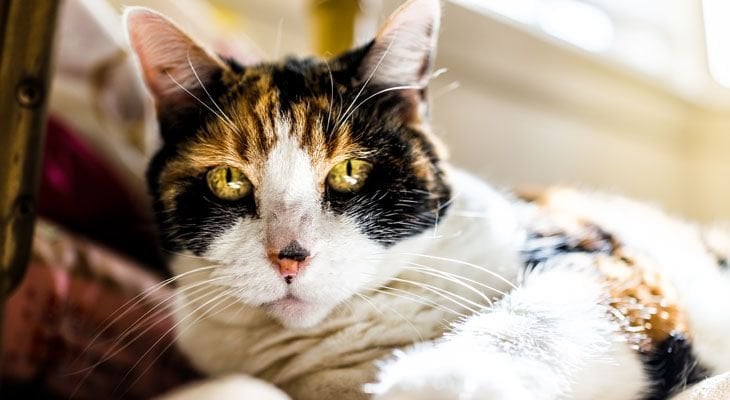
senior cat
Thanks to advancements in veterinary care, today’s cats can live well into their teen years. It is not uncommon for cats to live to be 18 or even older. However, in order for cats to live a long full life, they need proactive veterinary care to stay healthy.

As cats age, they are at greater risk for chronic diseases and health complications. However, cats are also masters at hiding illness. Semi-annual veterinary appointments are the best way to monitor a cat’s well being. For a senior cat, six months can be the equivalent of two years – a number of health changes can happen during this period.

During a wellness exam, a veterinarian will check a cat’s weight and body condition, skin and coat quality, eyes, ears, thyroid, heart, lungs, joints, mouth and abdomen. A veterinarian may also conduct diagnostic blood work and parasite screenings. While physical changes are easily noticed (e.g., weight loss or change in coat quality), internal changes are more difficult to detect. Diagnostic tests provide an important snapshot of a cat’s internal health and can detect problems such as hyperthyroidism and kidney disease.

Feline hyperthyroidism and kidney problems are the most common health conditions affecting older cats. Hyperthyroidism affects many organs in the body, including the heart. Hyperthyroidism can lead to secondary heart disease as well as hypertension (high blood pressure). Kidney disease can also cause hypertension. Your veterinarian can check for this during your cat's exam. Blood tests during a semi-annual wellness screening are the best way to detect hyperthyroidism and kidney problems. With early diagnosis, medical treatments can be very successful in managing these disease. These are examples of why proactive veterinary care is so important for senior cats.

Wellness exams are also an opportunity to evaluate a cat’s dietary needs. As cats age, their nutritional needs change. For example, cats with kidney problems should have a diet low in protein and phosphorus. Less active cats may need to be fed less in order to prevent weight gain and obesity. Other cats may become disinterested in food, resulting in weight loss. Cats that lose their sense of taste and smell may also lose interest in eating. Unfortunately, gradual weight loss can also go unnoticed, especially for longhaired cats. This is why nutrition evaluations and regular weigh-ins are so important.

Just like humans, cats will have different wellness needs as they age. Some cats may need a special diet while other cats may need medication to manage a chronic disease. Your veterinarian will make specific recommendations based on your cat’s wellness needs.

Sources:

American Association of Feline Practitioners. Friends for Life, Caring for your Older Cat.

Cornell University, College of Veterinary Medicine. Hyperthyroidism in Cats.

No article settings found. Please configure it

Featured Services

  • Online Forms

    Our patient forms are available online so they can be completed in the convenience of your own home or office.
  • Services

    We strive to provide complete care for our patients. Learn more about all the services we provide.

Office Hours

Monday:

7:30 AM-5:30 PM

Tuesday:

7:30 AM-5:30 PM

Wednesday:

7:30 AM-5:30 PM

Thursday:

7:30 AM-5:30 PM

Friday:

7:30 AM-5:30 PM

Saturday:

Closed

Sunday:

Closed

Find Us

Check out the map below to locate SWVH!

Testimonials

We love to hear your feedback!

  • "Southwest Vet is a wonderful place to take our animals. The front desk ladies are knowledgeable, patient, and compassionate. The vet techs are so wonderful with our animals. And Drs. Sargent and Rasmussen are just the tops!! The care our animals receive is extraordinary!!"
    Sarah S.
  • "Thank you so much for all that you do. You have always gone above and beyond for my pets and I. I feel truly blessed to have found you when I moved to Reno. Tank thinks you’re pretty awesome, too!"
    Ashley D.
  • "Thank you to each and every one of you who helped care for Gus while he was recovering during his long and scary week with Parvo. We can’t thank you enough for everything you did to get our loving and playful guy home."
    Aaron and Lisa C.
  • "So rare it seems to encounter an entire professional office who are as smart as they are kind. We are so grateful to have you care for Einstein. Thank you for your excellent care, patience and generosity."
    Leah R.

Featured Services

  • March Newsletter: How to Keep Your Cat Safe When Outdoors

    Wondering how your cat can safely spend time outdoors? ...

    Read More
  • March Newsletter: How to Choose Safe Blankets for Pets

    Do you know how to pick a safe blanket for your pet? ...

    Read More
  • February Newsletter: How to Reduce Dental Anxiety in Pets

    Does your pet hate toothbrushing? These tips could reduce dental anxiety. ...

    Read More
  • February Newsletter: How to Safely Change Your Cat’s Food

    Buying a new food for your cat? Find out how to switch foods safely. ...

    Read More
  • January Newsletter: Signs Your Pet Needs a Wellness Exam

    Does your pet need a wellness exam? ...

    Read More
  • January Newsletter: How Your Veterinarian Can Help If Your Pet Ingests Something Toxic

    Has your pet eaten something it shouldn't have? Find out how your vet can help. ...

    Read More

Newsletter Sign Up

Error!

    • Copyright © 2026 MH Sub I, LLC dba iMatrix.
    • Admin Log In
    • Site Map