
Your Kitten's Developmental Milestones
Do you know what to expect if a kitten will soon be joining your family? Just like human babies, kittens pass through several distinct developmental stages.
Birth to 2 Weeks
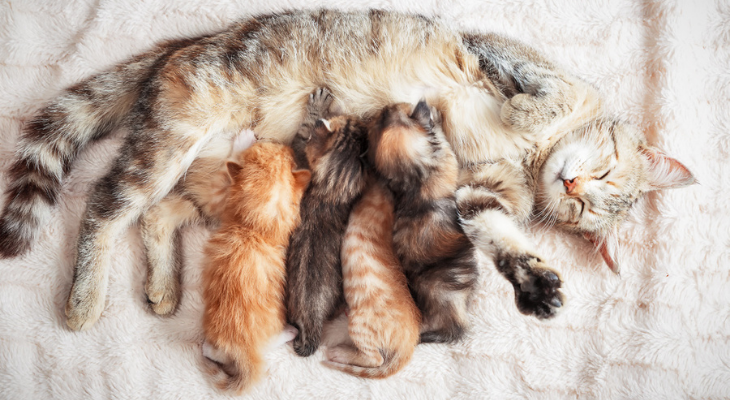
Kittens can't see or hear when they're born but will develop those important senses fairly quickly. They'll identify their mother by scent and snuggle close to her and their littermates to keep warm. During the first two weeks, kittens spend much of their time asleep. Unable to handle even the most basic actions themselves, toothless newborns rely on their mothers for food. Mothers groom newborns by licking them, which also helps them go to the bathroom.
By the end of this period, kittens' eyes and ear canals open, making it possible to see and hear for the first time.
2 to 8 Weeks
Kittens can now see, although their distance vision will still be unclear for a while. They'll take their first steps and begin to explore their immediate surroundings. Their senses of smell and hearing will improve dramatically by the fourth week. For the first time, they'll begin to pay attention to the other kittens in the litter.
As they become steadier on their feet, and their vision improves, you'll see the kittens in a litter playing together. Teeth will begin to appear around three weeks of age. During this period, kittens learn how to use a litter box and groom themselves. Although they still rely on their mother for feedings, the little felines will gradually become much more independent.
Socialization takes place during this stage. Through socialization, kittens learn how to interact appropriately with other animals and people. Once kittens are a few weeks old, they can be gently handled for short periods. As they get a little older, play sessions with people should increase. DVM360 notes that it may be more difficult to socialize cats if they haven't had positive experiences with people and other animals before 7 weeks of age.
8 to 12 Weeks
Weaning starts at the beginning of this period. As feedings taper off, young cats can begin to eat kitten food. At this stage, kittens may be separated from their mothers to join new homes. Play becomes a favorite pastime. Kittens enjoy pouncing on invisible prey, zooming through the house, chasing their tails, and play fighting with their littermates or other cats.
3 to 6 Months
When kittens are around three months, baby teeth begin to fall out and are soon replaced with permanent teeth. Now is the time to catproof your home, if you haven't already done so, as teething kittens like to chew on all sorts of objects.
Kittens begin to fill out during this period and change from fluffy balls of fur to lean and muscular young cats. Although your kitten is still young, it will soon be able to reproduce. In fact, cats can become sexually mature as young as six months. Spaying and neutering, the surgeries that prevent reproduction, also reduce your pet's risk of developing certain types of cancers, including breast and testicular cancer.
Spaying or neutering can be performed as young as eight weeks, according to the ASPCA, but should be scheduled for no later than five months to prevent pregnancy.
6 to 18 months
Your kitten is now a teenager and will become fully grown during this stage. Adolescent cats have plenty of energy and enjoy playing with you and other cats and pets in your home. These enthusiastic play sessions can occur at all hours of the day or night.
When your kitten is a year old, it's time to make the switch to adult cat food. When your cat stops growing, it no longer needs the increased calories and nutrients that kitten food provides. If you continue to offer kitten food, your cat may soon develop a weight problem. Start the switch by mixing cat and kitten food together, gradually decreasing the amount of kitten food.
Do you have a new kitten? Plan to pay a visit to the veterinarian within the first several weeks after your new addition arrives. In addition to performing a checkup, your veterinarian will also offer several vaccines your kitten needs to stay healthy. Contact our office to arrange your feline friend's first visit to the veterinarian.
Sources:
DVM360: The Keys to Kitten Socialization, 2/25/17
PetMD: Kitten Development: Understanding a Kitten’s Major Growth Milestones, 3/19/18